
The Summer of Philadelphia

Updated: Jun 4
Why Philadelphia's Biggest Moment in Decades Is Arriving with Surprisingly Little Fanfare
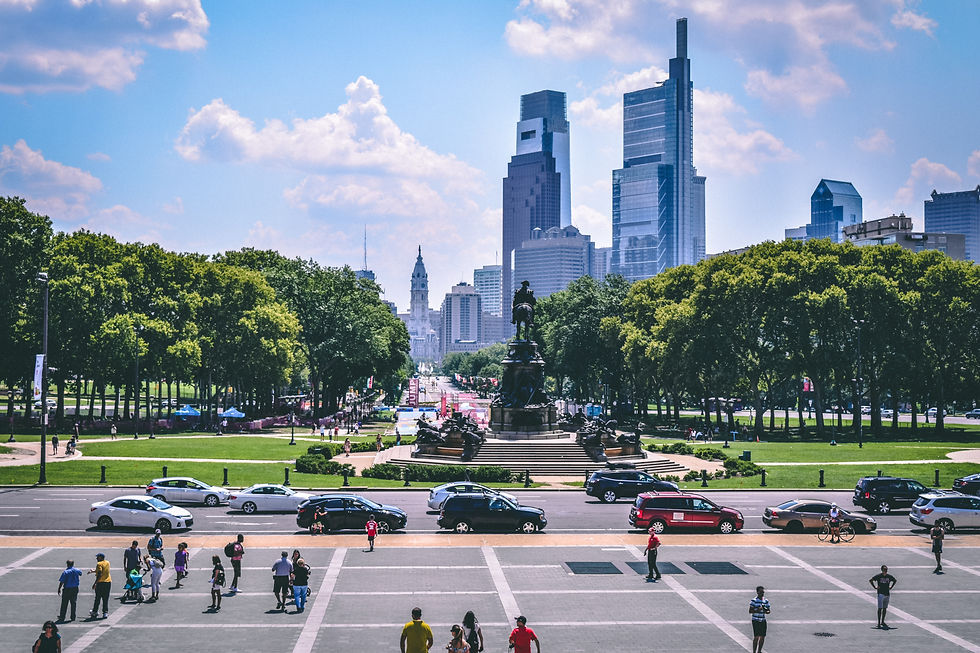
Going into the summer of 2026, the energy in Philadelphia feels different.
What's interesting, though, is that it doesn't necessarily feel exciting.
For months, I've been looking at the calendar and wondering why more people are not talking about what is about to happen in Philadelphia this summer. Maybe it's because the events are still a while away. Maybe people are waiting for it to feel real. Maybe everyone is just exhausted. Whatever the reason, it feels like one of the biggest summers in the city's recent history is approaching with surprisingly little conversation around it.
Philadelphia is preparing to host FIFA World Cup matches, welcome the MLB All-Star Week and All-Star Game, play a central role in America's 250th anniversary celebrations, and serve as the site of hundreds of cultural, civic, and community events throughout the area. Millions of visitors are expected to come through the city. (Good luck to anyone trying to drive around the sports complex.) International media outlets will spend weeks broadcasting Philadelphia to audiences around the world. For a period of time, one of America's oldest cities will become one of its most visible.
Yet the excitement feels surprisingly muted.
Maybe that's understandable. The national mood is very complicated right now. Political division has become part of daily life for so many. Economic uncertainty continues to affect families across the country. Many people are frustrated, exhausted, or simply focused on issues that feel more important than a sporting event or celebration. Even moments that might have once felt universally exciting now arrive in a much different environment.
I understand that feeling because I feel it too. It would be hard not to. Turn on the news, open social media, or talk to almost anyone, and it's clear that many people have other things on their minds right now.
At the same time, I think it is possible to acknowledge the realities of the present moment while also recognizing the significance of the one this summer. Whether people are excited, skeptical, optimistic, indifferent, or somewhere in between, the fact remains that Philadelphia is about to become one of the focal points of the nation and, at times, the world. For a city that often feels overlooked in national conversations, that matters.
Maybe part of the reason this summer has been on my mind for so long is that I've always been fascinated by the intersection of sports, cities, media, and the way major events can shape public perception.
This isn't about pretending Philadelphia is perfect, nor is it about ignoring the challenges that remain. It's about recognizing that for a brief moment, millions of people will be looking in our direction. What they see, experience, and remember has the potential to influence how Philadelphia is viewed long after the crowds leave and the headlines move on.
Philadelphia occupies a unique place in the American landscape. The city is home to world-class universities, vibrant arts organizations, and one of the strongest sports cultures in the country. Yet it frequently exists in the shadow of larger media markets. New York and Washington often dominate national attention, leaving Philadelphia somewhere in the middle, where its importance is understood locally but not always recognized elsewhere.
For decades, Philadelphia has often been reduced to a familiar collection of references. History. Rocky. Sports. Cheesesteaks. Those things are undeniably part of the city's identity, but they are only part of the story. Philadelphia is also a center of education, medicine, entrepreneurship, culture, journalism, innovation, and creativity. If there was ever a moment to showcase that broader identity, this is it.
Still, this is not unfamiliar ground for the city. Philadelphia has experienced moments when attention arrived at scale and the impact extended far beyond the event itself.
The most obvious example is the nation's Bicentennial celebration in 1976. What began as a yearlong commemoration of America's 200th birthday ultimately left a lasting mark on the city itself. The Liberty Bell was moved into its own dedicated pavilion, the African American Museum in Philadelphia was established, and public investment helped restore and preserve historic areas that continue to shape how visitors experience the city today.
The significance of those changes wasn't always obvious in the moment. What remains decades later is not the celebration itself, but the institutions, public spaces, and cultural identity that grew from it.
This summer can represent a rare opportunity to reshape how people think about and see Philadelphia. Not through a marketing campaign or a slogan, but through lived experiences. Through visitors exploring neighborhoods they have never seen before. Through international audiences watching broadcasts from across the city. Through cultural institutions, civic organizations, businesses, and residents putting their best foot forward while the spotlight is here.
None of this means Philadelphia is without challenges. Like every major city, Philly continues to face serious issues involving public safety, economic inequality, housing, infrastructure, and quality of life. Questions surrounding public transit, transportation, and the city's ability to accommodate millions of visitors remain part of that conversation. Those realities do not disappear because the world is watching. In fact, they remain part of the story. But acknowledging those challenges should not prevent us from recognizing the scale of this moment.
Whether the city fully capitalizes on that opportunity remains to be seen. Whether the attention translates into long-term economic, cultural, or civic benefits is a question that can only be answered many years from now. What seems clear today is that moments like this do not come around often.
In some ways, the summer we're all waiting for is already starting to arrive. As I write this, national teams are landing in the United States ahead of the World Cup. Brazil has arrived in the Northeast, while England and Scotland have begun preparations in Florida. What has felt like a distant date on the calendar for so long is beginning to take shape in real time. Over the next few weeks, we'll get to watch as the crowds arrive, the attention grows, and the atmosphere around Philadelphia begins to change. Maybe that's when the scale of this moment will finally start to feel real.
The spotlight is coming whether we're talking about it or not. The real question is what Philadelphia chooses to do with it.


Mình hay xem soi cầu XSMB với soi cầu MB mỗi ngày để kịp cập nhật trước lúc quay số, kiểu để đỡ bị động. Thường mình cũng lướt qua phần dự đoán XSMB, xem thêm thống kê lô gan và lô xiên để tự cân nhắc xem dạo này bộ số nào có dấu hiệu lặp lại. Có hôm anh em trong nhóm còn bàn về mấy công cụ quay thử XSMB, Rồng Bạch Kim, rồi đối chiếu dữ liệu lịch sử cho dễ hình dung tần suất thực tế. Mình thấy dd xsmb chỉ là một phần tham khảo thôi, chứ đoán miền Bắc không thể trông vào hên xui hoàn toàn, vẫn phải ghép thêm cầu bạch…